
I’ve read several posts from new teachers on social media asking for advice before they start working this school year, which I thought was great because teaching is a profession that with support and mentorship from other teachers can help new teachers navigate the profession. Also, the amount of teachers who leave the profession within the first five years has increased since I started teaching in 2007, and the current number shocked me. According to EdSource.org, in a federal 5-year study among public school teachers in the United States (2007-2012), the percentage of teachers who left the profession within the first five years was 17% and currently, according to an article from americanprogress.org on how to increase teacher retention, they reported that 44% of new teachers in the United States leave the classroom within the first five years. Wow, the amount has more than doubled in the 20 years that I have been working as a teacher; it’s like the divorce rate, it has been increasing over time. I’m sure there are several reasons as to why teachers have been leaving the profession, and the percentage varies by location, but as a teacher and teacher mentor myself, I’m here to offer advice on what to do to stay in the teaching profession, if that is what you want to do. Here is my advice for someone starting out as a classroom teacher, to hopefully help them set structures in place to overcome the high rate of teacher turnover that exists in this profession:
- Find a mentor teacher
- Find teachers to have lunch with
- Find a good stopping point
- Take care of your health and wealth
- Have fun
1) Find a mentor teacher
The first years of teaching can be overwhelming, you’re learning a new job, you’re tasked with a lot of responsibilities, and you’re the adult in charge of making all the decisions. There’s a lot of things going on during class time, and over time you will learn how to handle the interruptions and situations while teaching (I did). But you will also need the support of successful teachers who came before you to share their tricks and tips, to bounce your ideas with, and to support you with clearing your credential and preparing for observations. I think having a mentor teacher who is familiar with your content area is critical during the first years as an educator. They’re teaching the same standards as you, they know the ins and outs, and they know which areas of studies students have the most difficulty with. They’re also familiar with the teaching resources at your school and they can support you with lesson planning, if needed. Mentor teachers also support you by helping you clear your credential and prepare for teacher evaluations. Clearing your credential in my state requires two years of more coursework, I know, but it’s a time to reflect and create goals in your teaching practice. Working with the mentor, they will listen to you, support you in completing your work, and observe you teaching to offer you feedback. I find the process a little similar to the National Board components (more on that later) and creating goals may be a part of your teacher evaluations. Admin will often observe you periodically, and more so when you are just starting out. A mentor teacher can help you prepare for the observations, complete any paperwork that goes along with it, as they have experience with successfully completing the process. I believe a mentor teacher will guide you through reflecting on any issue, they will challenge you to think things through, and teach you to make your own decisions so that you can be confident in making them on your own. I’ve now become a mentor teacher to new teachers, but even I still consult with other teachers when I have new ideas and want to think out loud because I like learning from others’ experiences, we all see things differently, and they may share something I want to incorporate into my ideas.
2) Find teachers to have lunch with
During my first years of teaching, one piece of advice that I received from a coworker that has still stuck with me and I’m going to share with you is to not work during lunch time, and I listened. Lunch time is the one time during the school day where I can be with my thoughts and interact with other adults, so I say find other teachers to have lunch with so that you aren’t working and can socialize with others. Some teachers allow their students to eat lunch in their classroom; I am not one of those teachers. I am strict and enforce my expectations and school rules anytime I am around students, including outside of my classroom. If I see students during lunch time, I will continue to enforce the rules, so having a student free lunch will give me time to not “be on” for a bit. Some people say that coworkers aren’t your friends, but my friends are former coworkers I worked with years ago; do what works for you in that department. I’ve usually eaten in my coworkers’ classrooms so I can get away from my classroom and get some steps in. It’s nice to get together with other adults during lunch, it doesn’t need to be daily, but it serves as a break for you during the middle of the school day. If you prefer to eat lunch alone, that’s fine, too. I do it as well, I’ll play music while I eat, and that’s it. Give yourself the break from thinking about work and from working, you earned it and deserve it. Again, this is up to you, but taking a break and/or talking with other adults helps you not always be working and prevents you from making working during lunch a habit, hopefully reducing teacher burnout.
3) Find a good stopping point
So once the school day is over, you may notice how much quieter the hallways and your classroom are. If you’re not in a rush home and if you don’t participate in chaperoning or hosting any after school activities, then you may be tempted to grade, organize, or work on the item(s) on your list that you were unable to complete earlier. Sometimes some teachers have to leave right after school to pick up their children from school or daycare, so they end up taking work home to grade or work from home. My advice is to find a good stopping point of when you stop thinking about and doing any activities for work, emphasis on thinking about work, I think that’s even worse than doing work activities. When I first started teaching, I used to stay after school a couple of hours here and there to get things done because the only time I was able to create material or get organized was after school. But as I gained more teaching experience, I learned I couldn’t keep staying late anymore and the work would be there for me whenever I was able to get to it. What also helped was I had materials already created and with time and experience I make decisions more quickly when it comes to lesson planning. I think it’s important to find a good stopping point that you’re okay with because the work doesn’t end and we can always continue to revise ideas and plans. You have to learn when to stop so that the job doesn’t overwhelm you and cause you to burn out. I do think this can escalate based on your personality, if you work and don’t notice the time then it can be easy to stay late. I’ve worked at three schools and the last two schools have asked teachers to leave campus by a certain time for our own safety. I love this; it forces me to not stay late at work. I set an alarm, I clean up, and then I go home. Over time, I’ve also learned and understood that anything I want to do takes longer than I really think, there’s always going to be more to do, but I need to find a good stopping point where I’ll be prepared to teach and also get rest.
4) Take care of your health and wealth
Being around kids means you’re going to be around germs which means you could get sick and not feel well enough to go to work to teach. Your district may provide a certain number of illness days to use when you get sick, but if the teacher is out, then that means you’ll need to call a substitute and write lesson plans. I’ve heard teachers say that it’s more work to prepare lesson plans for when you’re out sick then to just go into work while sick, and yes, it can be. My advice, if you’re sick and not feeling well, take the time off, but have emergency plans set in place ahead of time, including computer and paper copies of work for students to complete for when you are out already in your classroom. Also, if you have a doctor appointment that you need to make, make the appointment, even if you need to miss work, you need to stay healthy to work. My schools have asked for emergency lesson plans and a copy of my seating chart for each of my class periods, but I don’t think the office has made copies of the emergency lesson plans I share with them when I’ve been out. To be prepared for when I get sick, I created a template to use for my substitute lesson plans, which includes my class rules, the bell schedule, and the agenda for the day. I also have review material already printed and in the classroom ready to use and I’ve selected math skills for students to practice with online using IXL. I then ask my coworkers to get the materials ready for the substitute and leave them on my desk. My students get chromebooks checked out to them and the school asks them to take the chromebook fully charged to school with them daily. For the students who take the chromebook, I leave skills for them to practice on IXL, with work shown on lined paper, and for the students who don’t bring the chromebook, they work on the paper copies of math review assignments instead. Having lessons selected on IXL beforehand and paper copies available of math reviews already in my classroom saves me time when I am not feeling well and I need to take a day off. Finally, I mentioned investing in your wealth, that means learning about your school district’s retirement options. I highly encourage you to make the time to invest in your future self, to prepare for retirement, because the sooner you start the more time your investment will be in the market and more opportunity for growth, see my post titled, “Teacher Retirement Account Options” to read more about this.
5. Have fun
Being a teacher can be stressful, the job is more than what people see we do in the classroom, but the teaching part, interacting with students, seeing your lesson plans come to life and helping students learn new material and make connections, sometimes not, that’s the fun part. Working with the students is what most of us are there to do, to support them in learning the material and preparing them for their future career goals and selves. My advice is to focus on having fun when you’re delivering a lesson, be present when you’re working with your students, and include your personality and your strengths into teaching, it will make the class more fun for you and hopefully your students, too. The best compliments I’ve received from students and coworkers who have observed me is that they can tell I’m passionate about teaching and enjoy working with my students. I get animated when I present information, I move around the classroom, and sometimes we sing, too, it gets the students laughing at me, with me, maybe both, but they remember the math facts when we sing them. I love analyzing data, so something I do in my classroom when I’m trying something new is I tell my students that I have a new idea and we are going to try it out. I ask them for feedback and suggestions to make the idea better, since I’m just trying to help them process the information to learn it. I think that’s fun because that’s the researcher side of me getting to analyze some data, but it also shows the students that you are human, and can be nervous about trying something new. The job can be stressful, I am not saying it isn’t, but staying present, bringing yourself into the classroom, having fun while teaching, has helped make the job enjoyable for me. You will figure out how to make it all work for you in due time, with the support of your mentor, colleagues, your students, and patience.
I’m glad to see new teachers asking veteran teachers for support. It shows people are willing to ask for help and are open to suggestions. What I shared is the advice from my experiences as a public middle school and high school teacher with 20 years teaching experience and what I have learned along the way. As a new teacher, what’s your support system at your school site, and what advice resonates with you?
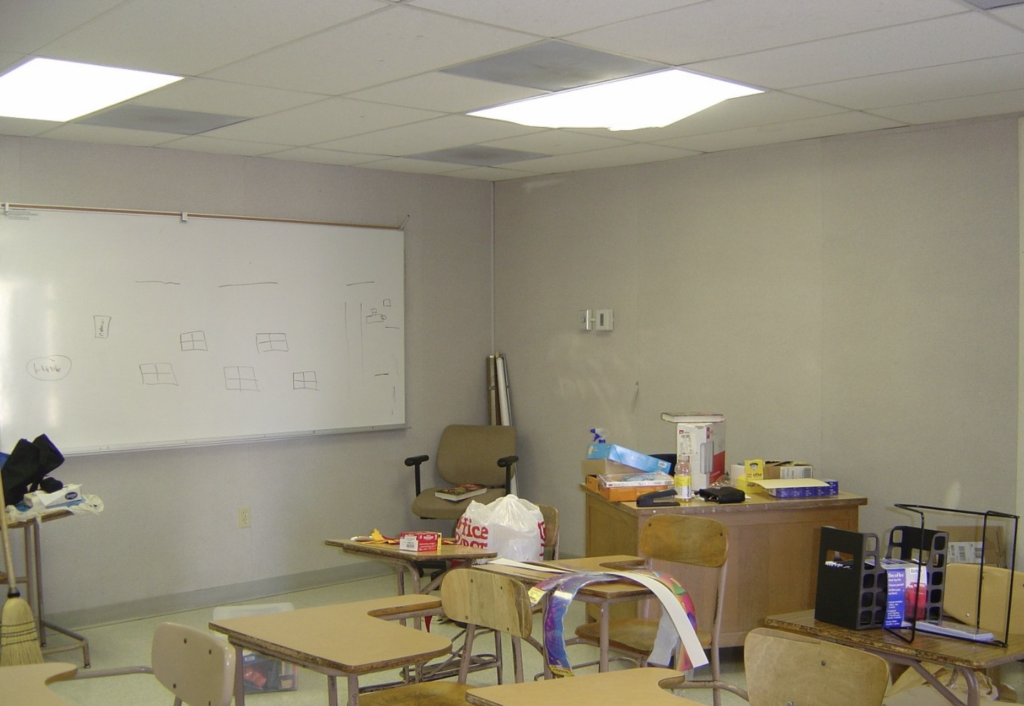
By the way, the picture on the post is of my very first classroom in 2007. The previous teacher left a mess that my sisters helped me clean up and then helped me set up and prepare my classroom for my first year of teaching.